
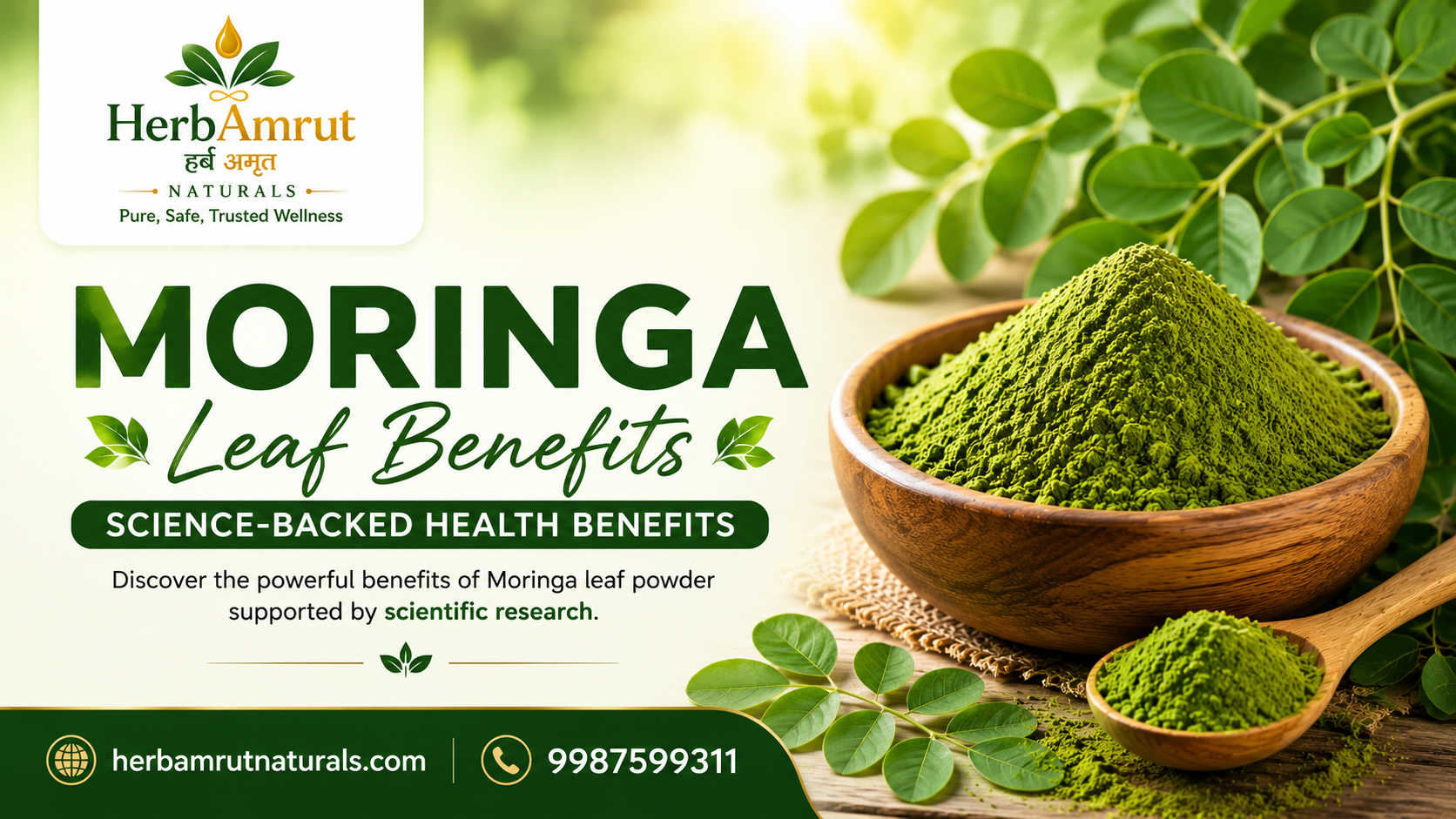
Moringa (Moringa oleifera): Evidence-Based Health Benefits
Scientific Review Based on Published Research
Introduction
Moringa (Moringa oleifera), commonly known as the "Drumstick Tree" or the "Miracle Tree," has been used in traditional medicine for centuries. In recent years, scientific research has investigated its nutritional value, antioxidant properties, and potential role in supporting metabolic health.
One of the most frequently cited scientific reviews is:
Stohs SJ, Hartman MJ. Review of the Safety and Efficacy of Moringa oleifera. Phytotherapy Research. 2015;29(6):796–804.
This peer-reviewed review evaluated available laboratory, animal, and human studies on Moringa oleifera to assess both its effectiveness and safety.
Nutritional Profile
Moringa leaves are naturally rich in several nutrients, including:
- Plant protein
- Dietary fiber
- Vitamin A precursors (beta-carotene)
- Vitamin C
- Vitamin E
- Calcium
- Potassium
- Iron
- Magnesium
- Essential amino acids
- Polyphenols and flavonoids
These nutrients contribute to the overall nutritional value of moringa leaves.
Bioactive Compounds
Researchers have identified several naturally occurring compounds in moringa leaves that may contribute to its biological activity, including:
- Quercetin
- Chlorogenic acid
- Kaempferol
- Isothiocyanates
- Phenolic acids
- Flavonoids
- Carotenoids
These compounds possess antioxidant properties and have been widely investigated in nutritional science.
Antioxidant Activity
According to published research, moringa leaves contain naturally occurring antioxidants that help neutralize free radicals.
Oxidative stress has been associated with normal aging and various chronic diseases. Laboratory studies suggest that moringa leaf extracts demonstrate significant antioxidant activity.
Blood Sugar Support
Several human studies reviewed by Stohs and Hartman reported improvements in blood glucose measurements after moringa supplementation.
Possible mechanisms include:
- Delayed digestion of carbohydrates
- Improved insulin sensitivity
- Reduced oxidative stress
- Reduced inflammation
However, the review emphasized that larger, well-designed clinical trials are needed before firm conclusions can be drawn.
Cardiovascular Health
Research reviewed in the publication suggests that moringa supplementation may help support cardiovascular health by:
- Improving lipid profile in some studies
- Reducing LDL cholesterol in certain populations
- Supporting healthy triglyceride levels
- Providing antioxidant protection
The magnitude of these effects varied between studies.
Anti-inflammatory Properties
Inflammation is a natural biological response. Experimental research indicates that moringa contains plant compounds capable of modulating inflammatory pathways.
These observations have encouraged further investigation into moringa's potential role in supporting normal inflammatory balance.
Liver Health
Animal studies and limited human evidence suggest that moringa may help support normal liver function by reducing oxidative stress and protecting liver cells.
More high-quality human clinical research is required to confirm these findings.
Nutritional Support
Because moringa leaves contain protein, vitamins, minerals, and phytonutrients, they can contribute to overall dietary quality when consumed as part of a balanced diet.
They may be especially useful where dietary intake of micronutrients is inadequate.
Safety
The review concluded that moringa leaf preparations were generally well tolerated in the available human studies.
Reported adverse effects were uncommon and usually mild, such as temporary gastrointestinal discomfort.
People who are pregnant, breastfeeding, have chronic medical conditions, or take prescription medications should consult a qualified healthcare professional before using any dietary supplement.
Scientific Conclusion
The available scientific evidence suggests that Moringa oleifera leaves are a nutrient-rich food with antioxidant properties and potential health benefits. Early human studies indicate possible support for blood glucose regulation, lipid metabolism, and overall nutritional status.
However, current evidence is still evolving. Moringa should be viewed as a nutritious dietary supplement rather than a treatment or cure for any disease. Continued high-quality clinical research is needed to better define its long-term health effects.
Scientific Reference
Stohs SJ, Hartman MJ.
Review of the Safety and Efficacy of Moringa oleifera.
Phytotherapy Research.
2015;29(6):796–804.
DOI: 10.1002/ptr.5325
PubMed ID (PMID): 25808883
Disclaimer
This information is intended for educational purposes only. It should not be interpreted as medical advice, diagnosis, or treatment. Dietary supplements are not intended to diagnose, treat, cure, or prevent any disease. Always consult a qualified healthcare professional regarding personal medical concerns.